Norway has water in the north and a drought in the south — and the grid can’t bridge the gap.
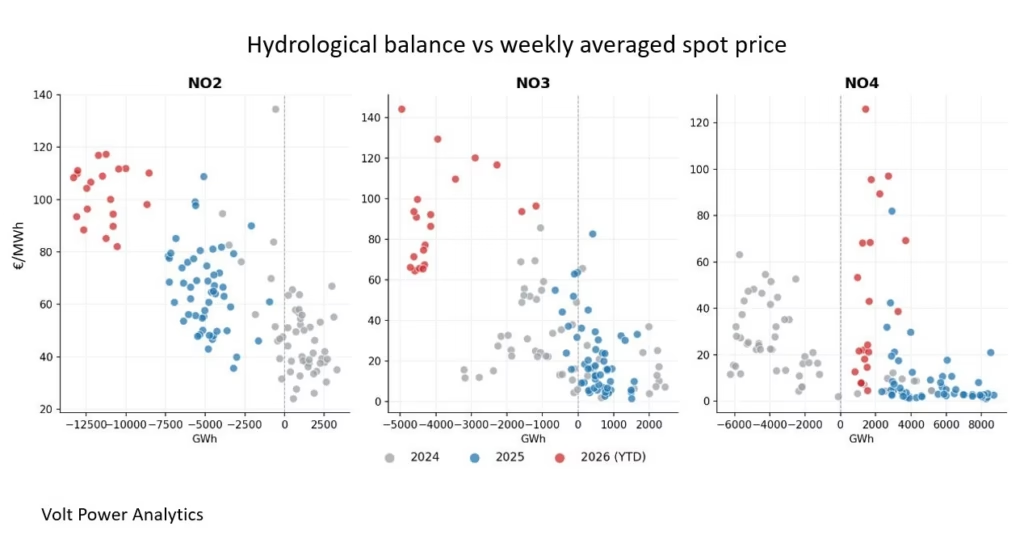
This chart plots weekly spot prices against hydrological balance (reservoirs and snow versus normal) for three Norwegian price zones.
NO2 and NO3
NO2 and NO3 tell a clean story: more deficit, higher price.
Year-to-date 2026 sits in the upper left of the chart, showing a large hydro shortfall combined with prices of €60–145/MWh on weekly averages. This may seem surprising for zones with direct cable connections to the continent, but when Norway runs a hydro deficit, it flips from exporter to importer — right when European markets are already tight.
The cables amplify the crisis rather than buffer it, at least for now.
NO4
NO4 is more complicated.
The zone has a hydro surplus in 2026, yet prices continue to spike frequently and unpredictably. Not every week, but often enough to stand out.
The surplus cannot reliably move south due to transmission constraints, and when demand peaks or export capacity tightens, the price signal from the deficit south leaks back into the market.
There’s plenty of water, but in the wrong place. And no guarantee it stays cheap.