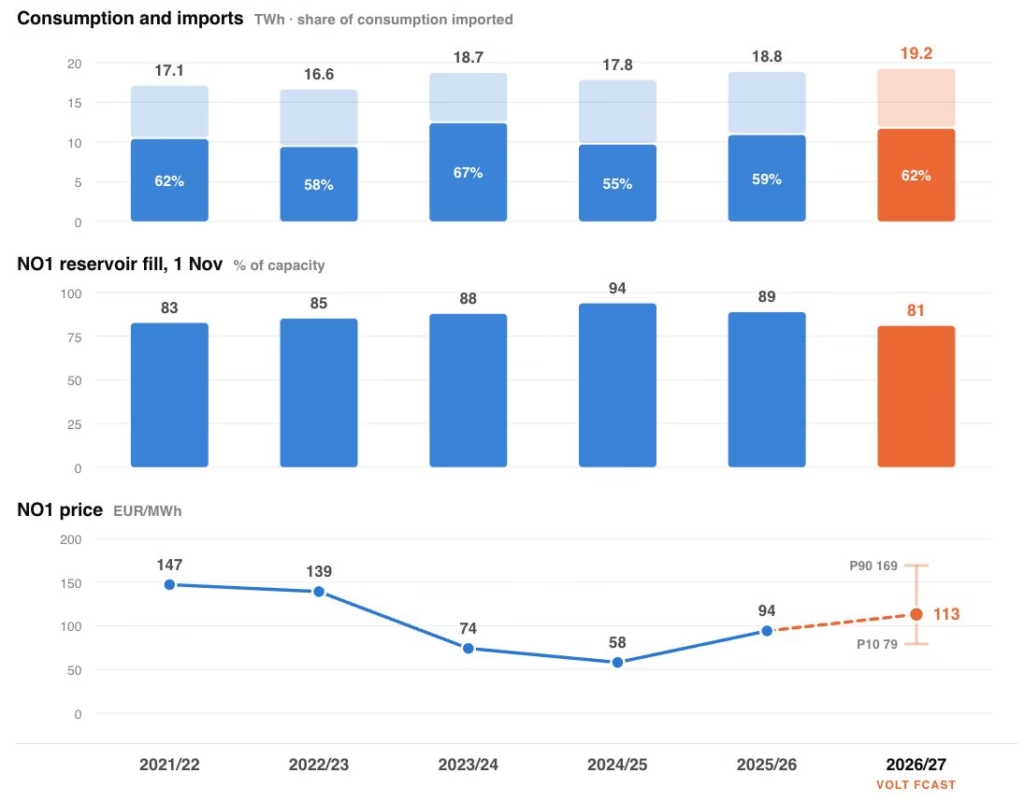
Almost every hour of the last five winters, the Oslo price area has been a net importer.
Imports from neighbouring price areas cover around 60% of what NO1 consumes between November and the end of March.
Hydro reservoir filling levels are naturally important. A 73% fill level going into winter 2021/22 coincided with an average price of €147/MWh, while a 91% fill level coincided with €58/MWh, alongside other driving factors.
As of the end of last week, reservoir levels were 71.3% in NO1 and 46.6% in NO2 — the lowest on record for this time of year.
After autumn inflow, our model has them at 81% and 63% respectively by 1 November.
NO1 Depends Heavily on Imports
Today, SE3 nuclear availability runs at around 55% in September and 60% in October, returning to close to full availability around 25 November.
As winter arrives, the timing of returning nuclear capacity is important — and this year, it comes just in time.
Less water in Southern Norway means more of the winter has to be covered by imports, and a short NO2 increases NO1’s dependency on SE3.
Higher Prices in the Base Case
The price follows.
Our base case for NO1 is €113/MWh, up from €94/MWh last winter, with a P10–P90 weather-year range of €79–169/MWh.
More imports are likely to mean higher prices for NO1 than in previous years, driven by the hydrological situation in NO2, consumption levels if we get a cold winter, and gas prices.
The conflict around the Strait of Hormuz adds further upside risk.
All figures represent the average across Volt Power Analytics’ forward model using 30 historical weather years.
Historical data: ENTSO-E and NVE.