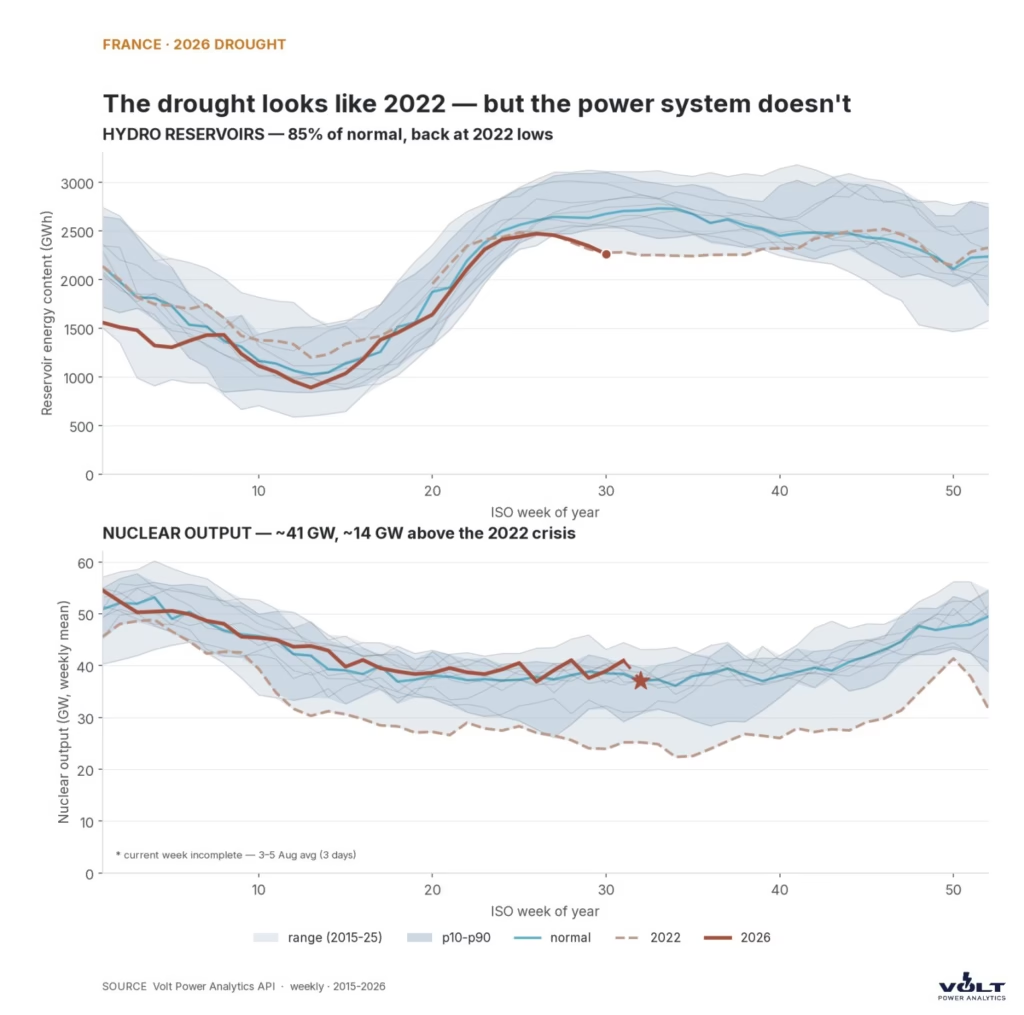
French hydro reservoirs are currently at around 85% of normal, almost exactly where they were this week in 2022.
However, the key difference from 2022 is that the nuclear fleet is running well.
French nuclear generation averaged around 40 GW in July this year — the highest level in the last five years — compared with around 25 GW in July 2022, when the problem was reactor corrosion, not weather.
Nuclear Cuts Are Not a Repeat of 2022
There has been news of nuclear cuts this past week of around 5 GW, or approximately 6% of capacity, due to low river flows and high river temperatures.
This is categorically different from the situation in 2022, when about half of the fleet was down for months due to structural corrosion.
You can see the approximately 5 GW dip — starred as an incomplete week — in the nuclear panel below.
These thermal and low-flow restrictions tend to ease as air and water temperatures cool through autumn, so we do not expect them to continue into November and December.
How Much Rain Does France Need?
Regarding the hydrological situation, France needs an above-average wet autumn to refill reservoirs to normal, but not an exceptional one.
We replayed every weather year of inflow since 1982 onto today’s starting point, holding hydropower production normal.
Of the 36 weather years analysed, 16 refill France to normal by the end of 2026, while the median outcome lands at around 91%.
Is This a Crisis?
No.
France has a thinner hydropower buffer than normal, but the odds of getting back close to normal are good.
The real downside is a very dry autumn.