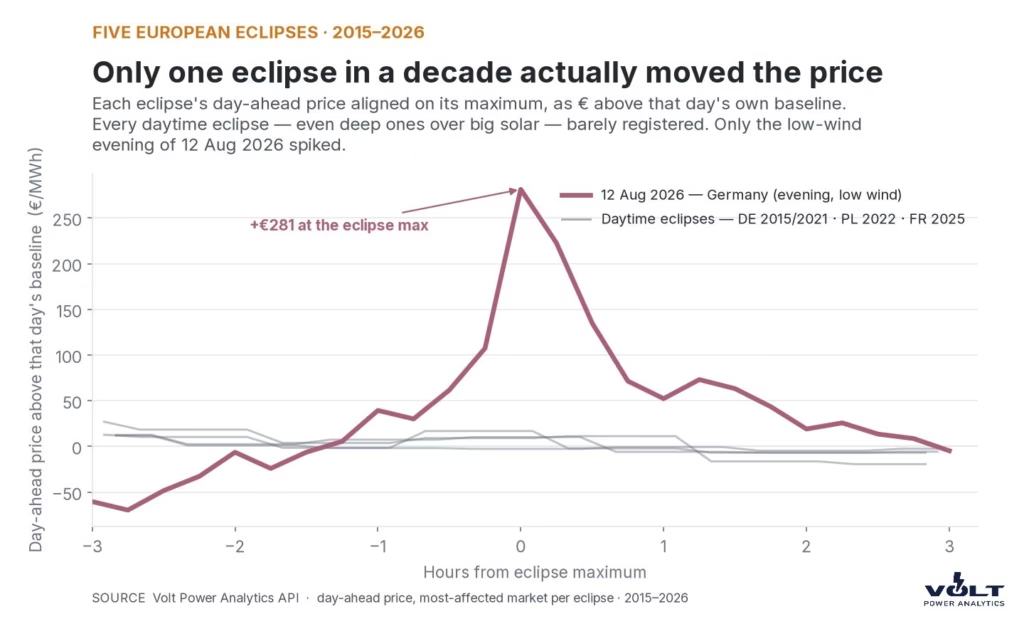
Of all five European solar eclipses during the last decade, only the one on 12 August 2026 moved power prices — and only in countries under partial eclipse.
Spain and Portugal, the only countries where the eclipse was total, lost around 4–5 GW and 0.3 GW of solar generation respectively compared with the day before. Yet prices stayed around €180–250/MWh.
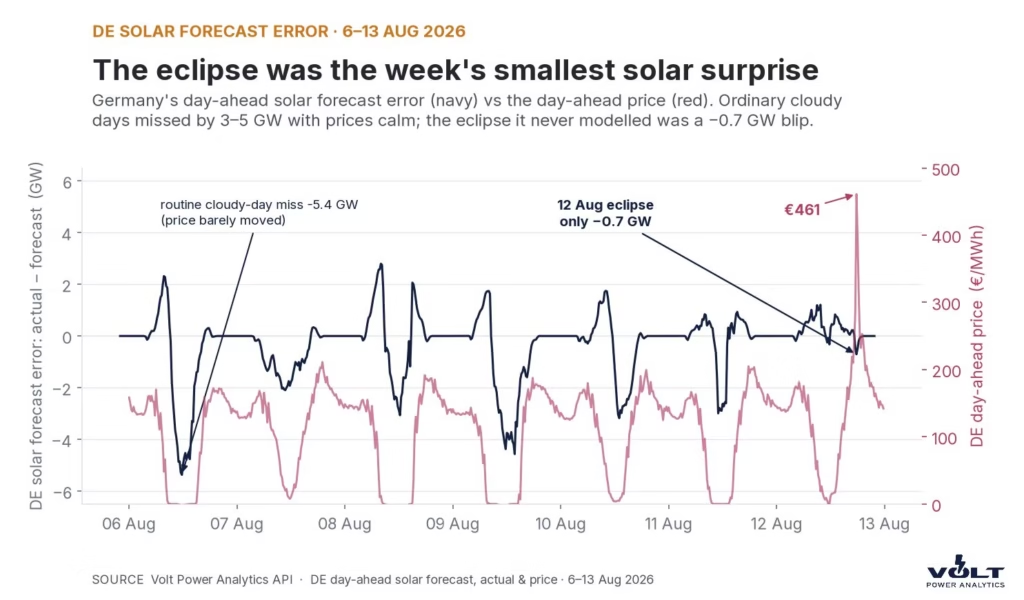
France and Germany were only under partial eclipse, lost around 0.6–0.7 GW, and prices reached €461/MWh — well above normal gas costs.
Timing, Not Magnitude
This may seem counterintuitive, but the reason is timing, not magnitude.
Every other eclipse of the last decade occurred during mid-morning or midday, when solar generation is high and relatively easy to replace.
The 2026 eclipse was the only evening eclipse.
The relatively small solar reduction was enough to tip the balance on a low-wind evening, just as the sun was setting and the system was reaching for its last and most expensive megawatts.
Why Iberia Coped Better
It was hot in Southern Europe, with temperatures around 37°C in Iberia, but Spain and Portugal coped relatively well.
Spain replaced the lost solar generation with comparatively cheap hydropower and gas.
Germany, on the other hand, had low wind and little flexible hydropower available. Run-of-river production was also low, meaning the system had to fill the gap with lignite and gas instead.
The Forecast Miss Was Surprisingly Small
Interestingly, ENTSO-E’s day-ahead solar PV forecast for Germany did not capture the eclipse at all.
But that did not really matter.
The 0.7 GW miss was actually the smallest solar forecast error of the entire week. Germany’s solar forecast can routinely be off by 3–5 GW on a cloudy day.
So, the weather models never saw the eclipse — but the market did.